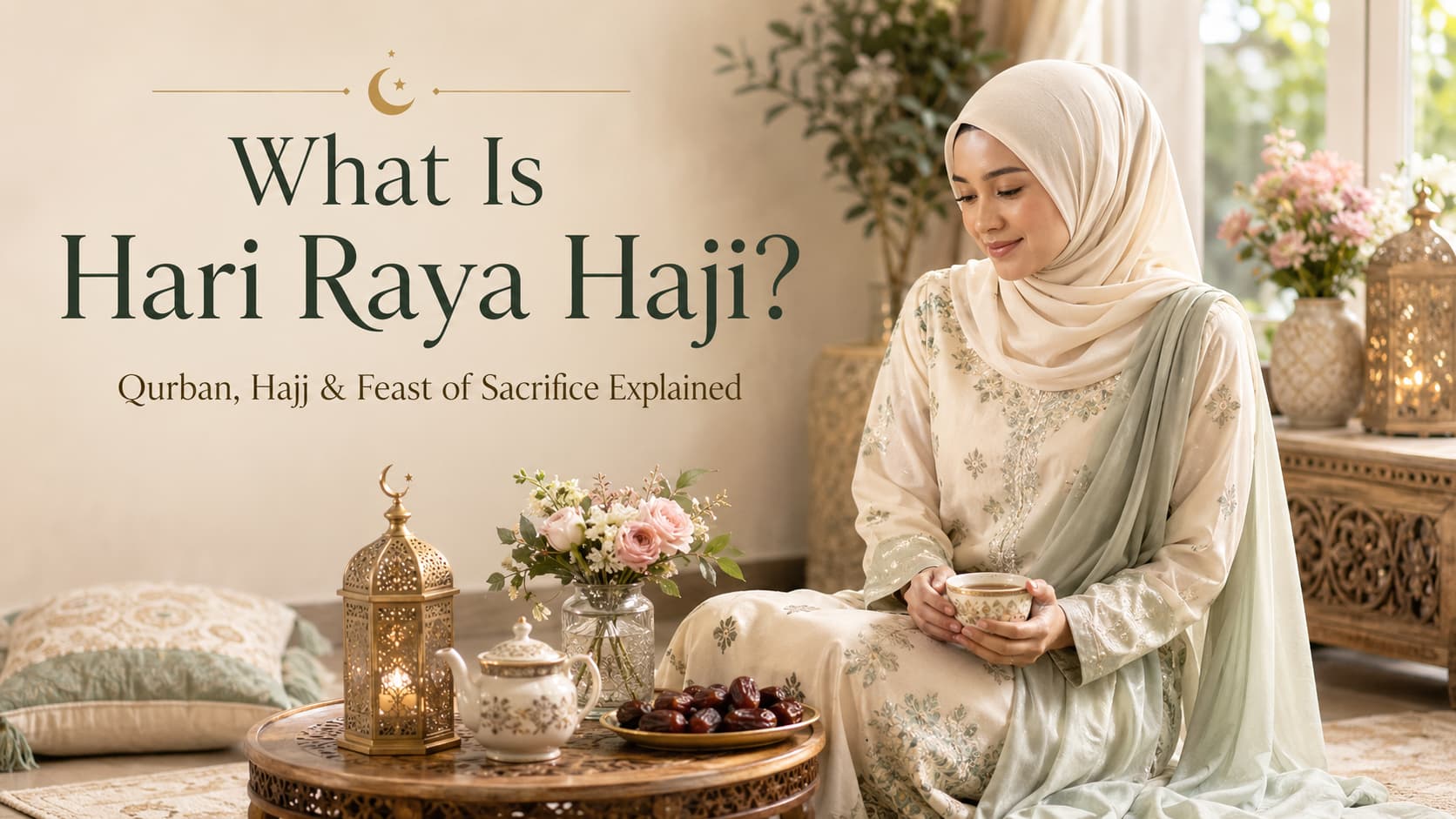
What Is Hari Raya Haji? Qurban, Hajj & Feast of Sacrifice Explained
Hari Raya Haji is the Malaysian name for Eid al-Adha, the Islamic holiday also known as the Feast of Sacrifice. It is connected with Hajj, the pilgrimage to Mecca, and with qurban, the act of sacrifice and sharing. In Malaysia, people may also call it Aidiladha, Hari Raya Qurban or Eid al-Qurban.
Quick Answer: What Is Hari Raya Haji?
Hari Raya Haji is an Islamic festival observed by Muslims in Malaysia and around the world. It marks the meaning of sacrifice, obedience, faith and generosity, and it takes place during the Hajj season.
The same festival is widely known internationally as Eid al-Adha. In Malaysia, the local names Hari Raya Haji, Hari Raya Qurban and Aidiladha are all commonly understood.
A simple way to remember it:
Many people search “what is Hari Raya Haji” because the name can feel slightly confusing. It includes the word “Haji,” so some assume it is only for people performing Hajj. Others hear “Hari Raya” and think it is the same as Hari Raya Aidilfitri.
Both ideas need a little correction. Hari Raya Haji is connected to Hajj, but it is celebrated by Muslims everywhere, not only by pilgrims. It is also different from Hari Raya Aidilfitri, which marks the end of Ramadan.
If you are looking for the date and public holiday details, read VEIMIA’s guide to Hari Raya Haji 2026 in Malaysia .
What Does Qurban Mean?
Qurban refers to sacrifice. In the context of Hari Raya Haji, it usually means the ritual sacrifice performed by eligible Muslims during Eid al-Adha, with the meat shared among family, neighbours and those in need.
This is why Hari Raya Haji is also called Hari Raya Qurban, Hari Raya Korban or Eid al-Qurban. These names focus on the giving and sacrifice aspect of the festival.
Qurban is not meant to be understood only as a ritual action. It also carries a moral message: faith, sincerity, humility and care for the wider community.
Why is qurban important?
Qurban reminds Muslims of the story of Prophet Ibrahim’s obedience to Allah. It is a story about trust, devotion and the willingness to give up something deeply valued.
In many Malaysian communities, qurban is organised through mosques, suraus, local groups or trusted organisers. Families may contribute to a qurban arrangement, and the meat is then distributed in a way that reflects charity and togetherness.
How Is Hari Raya Haji Connected to Hajj?
Hari Raya Haji takes place during the same Islamic calendar period as Hajj. Hajj is the pilgrimage to Mecca, and it is one of the most important acts of worship in Islam for those who are able to perform it.
The word “Haji” in Hari Raya Haji points to this connection. In Malaysia, many people use “Hari Raya Haji” because the festival is closely tied to the Hajj season and the rituals performed by pilgrims.
However, this does not mean Hari Raya Haji is only for pilgrims. Muslims who are not performing Hajj still observe Eid al-Adha through prayers, qurban, family gatherings and acts of giving.
Qurban-Hajj-Aidiladha Entity Relationship Map
For a full name comparison, read VEIMIA’s guide: Hari Raya Qurban, Hari Raya Haji, Aidiladha or Eid al-Adha: are they the same?
Why Is It Called the Feast of Sacrifice?
Hari Raya Haji is called the Feast of Sacrifice because Eid al-Adha centres on the meaning of sacrifice. The phrase helps English readers understand the festival quickly, especially if they are unfamiliar with the terms Hari Raya Haji, Aidiladha or Eid al-Qurban.
The sacrifice refers to the story of Prophet Ibrahim and his willingness to obey Allah. The festival honours that spirit of devotion and reminds Muslims to practise generosity, humility and gratitude.
When people search eid al adha feast of sacrifice, they are usually asking about this meaning. The answer is not only about the ritual of qurban. It is also about the values behind it.
Is “Eid Hajj” or “Eid al Haj” correct?
Some people search for terms such as eid hajj or eid al haj. These phrases usually refer to Eid al-Adha or Hari Raya Haji, but they are not the most polished terms.
For Malaysian readers, “Hari Raya Haji” sounds natural. For international English readers, “Eid al-Adha” is clearer. For content about sacrifice, “Hari Raya Qurban” or “Eid al-Qurban” may be used.
How Is It Observed in Malaysia?
In Malaysia, Hari Raya Haji is a meaningful public holiday and religious observance. It is often quieter than Hari Raya Aidilfitri, but it remains deeply important.
Many Muslims begin the day with Eid prayers. Families may dress neatly and modestly, visit relatives, prepare simple meals and take part in qurban arrangements. In some communities, the qurban process and distribution become the main focus of the day.
Common Malaysian observances
- Morning Eid prayers at mosques or prayer grounds.
- Qurban arrangements through mosques, suraus or community organisers.
- Sharing meat with family, neighbours and people in need.
- Family meals after prayers or qurban activities.
- Modest festive dressing, such as Baju Kurung, Jubah, Abaya or other respectful outfits.
- Simple greetings, such as “Selamat Hari Raya Haji,” “Selamat Hari Raya Aidiladha” or “Eid Mubarak.”
The tone of the day is usually warm but reflective. It is less about big celebration and more about worship, gratitude and community care.
Hari Raya Haji Is Not Hari Raya Aidilfitri
Hari Raya Haji and Hari Raya Aidilfitri are both important Islamic celebrations, but they are not the same.
| Festival | Also called | Main meaning |
|---|---|---|
| Hari Raya Haji | Eid al-Adha, Aidiladha, Hari Raya Qurban | Hajj, sacrifice, qurban, obedience and charity |
| Hari Raya Aidilfitri | Eid al-Fitr | Completion of Ramadan fasting, gratitude and celebration |
If you want the deeper comparison, read VEIMIA’s guide to Eid al-Adha vs Eid al-Fitr .
Which Name Should You Use?
The best name depends on your context. In Malaysia, all of the main terms are understood, but each one carries a slightly different emphasis.
| Use this term | When it fits best | Natural example |
|---|---|---|
| Hari Raya Haji | General Malaysia usage, public holiday guides, family conversations | “When is Hari Raya Haji this year?” |
| Hari Raya Qurban | When talking about sacrifice, qurban arrangements or community sharing | “Our mosque is organising Hari Raya Qurban.” |
| Aidiladha | Malay greetings, formal local messages, festive wishes | “Selamat Hari Raya Aidiladha.” |
| Eid al-Adha | International English content or global Muslim audience | “Eid al-Adha is also known as the Feast of Sacrifice.” |
| Feast of Sacrifice | Explaining the meaning to readers unfamiliar with Islamic terms | “Eid al-Adha is the Feast of Sacrifice.” |
For everyday Malaysian English, “Hari Raya Haji” is the safest and most natural phrase. For a meaning-focused article, “Hari Raya Qurban” and “Feast of Sacrifice” help readers understand the deeper message of the day.
FAQ
What is Hari Raya Haji?
Hari Raya Haji is Malaysia’s common name for Eid al-Adha, the Islamic festival connected with Hajj, qurban, sacrifice, faith and charity.
Is Hari Raya Haji the same as Eid al-Adha?
Yes. Hari Raya Haji is the local Malaysian name for Eid al-Adha. It is also commonly called Aidiladha or Hari Raya Qurban.
What does qurban mean?
Qurban means sacrifice. During Hari Raya Haji, it refers to the sacrifice performed by eligible Muslims and the sharing of meat with family, neighbours and people in need.
Why is Hari Raya Haji connected to Hajj?
Hari Raya Haji takes place during the Hajj season. The name highlights the festival’s connection with the pilgrimage to Mecca.
Why is Eid al-Adha called the Feast of Sacrifice?
It is called the Feast of Sacrifice because it remembers Prophet Ibrahim’s obedience and is observed through prayer, qurban, charity and sharing.
Is Hari Raya Haji the same as Hari Raya Aidilfitri?
No. Hari Raya Aidilfitri marks the end of Ramadan, while Hari Raya Haji is connected with Hajj, qurban and Eid al-Adha.
What is Aidiladha?
Aidiladha is the Malay term commonly used in Malaysia for Eid al-Adha. It refers to the same festival as Hari Raya Haji.
Is Eid al-Qurban the same as Eid al-Adha?
In most contexts, yes. Eid al-Qurban highlights the sacrifice aspect, while Eid al-Adha is the wider international name.
How do Malaysians observe Hari Raya Haji?
Many Malaysians observe it with Eid prayers, qurban, family meals, visits and acts of giving. The day is usually reflective, respectful and community-focused.
What greeting should I use for Hari Raya Haji?
You can say “Selamat Hari Raya Haji,” “Selamat Hari Raya Aidiladha” or “Eid Mubarak.” In Malaysia, “Selamat Hari Raya Aidiladha” sounds natural and respectful.
A Gentle Note for the Festive Season
Hari Raya Haji is a day of meaning before it is a day of dressing. At VEIMIA, we believe festive preparation should feel composed, respectful and comfortable — especially for women choosing modest layers in Malaysia’s warm weather.
This article is shared as a simple cultural and lifestyle guide for readers who want to understand the meaning behind Hari Raya Haji with clarity and care.