


How to Wear a Breast Prosthesis: A 5-Step Everyday Guide for Fit, Comfort & Care
To wear a breast prosthesis, first check that you have the correct form, side and orientation, then position it securely inside a well-fitting bra cup or prosthesis pocket. Put on your clothing, adjust the form until it feels balanced, and check that it remains comfortable and reasonably stable as you move.
A breast prosthesis does not always require a pocketed bra. Some forms sit securely inside a supportive full-cup regular bra, while others may feel easier to position in a dedicated internal pocket.
The steps below focus on removable, non-adhesive breast forms. Adhesive or contact prostheses have different wearing and skin-care instructions, so follow the guidance supplied with your specific form.
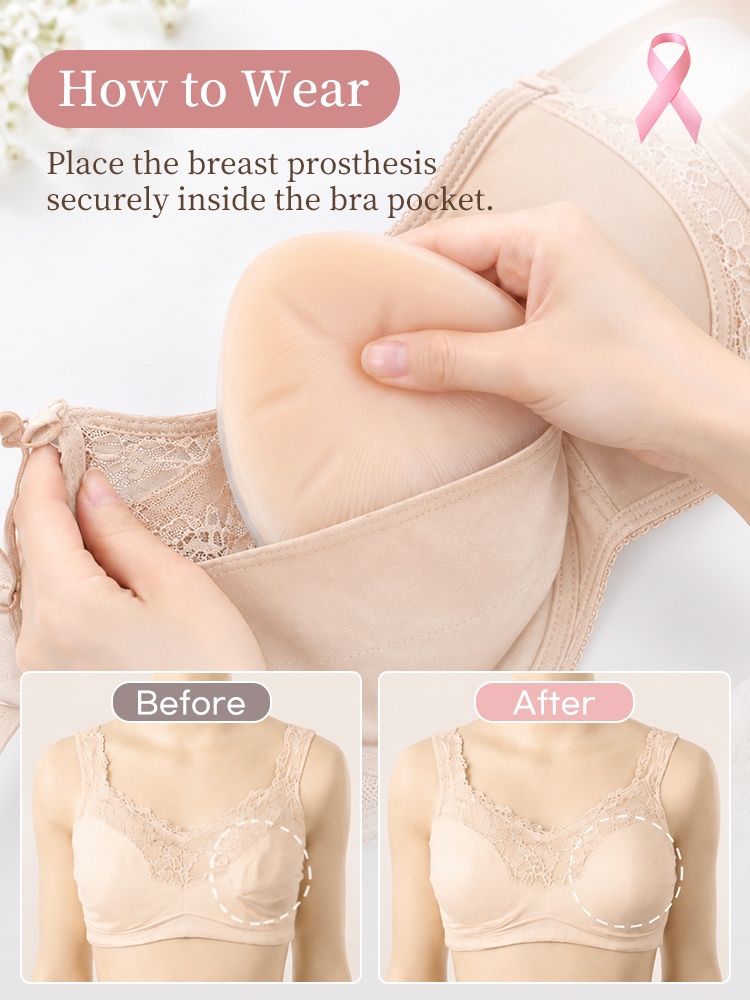
Breast forms vary. Some are shaped specifically for the left or right side, while others are symmetrical or designed to work on either side. Full, partial and contact forms can also sit differently. Use the orientation shown by your fitter or the instructions for your particular prosthesis.
The 5-Step Everyday Breast Prosthesis Wear Guide
Step 1: Check the side, shape and orientation
Before inserting the form, look at its shape rather than assuming every breast prosthesis is worn the same way.
Some prostheses are left- or right-specific. Others are symmetrical or universal. A partial breast form may also have a very different orientation from a full triangular form.
If your fitter showed you which edge sits toward the underarm or which surface faces the body, use that as your reference. If you cannot remember, check the manufacturer's instructions instead of guessing.
The bra matters too. If it rides up, gaps badly or feels painfully tight before the form is inserted, the prosthesis is unlikely to correct the fit.
For a more detailed bra-fit check, read how a mastectomy bra should fit .
Step 2: Position the breast form
There are two common ways to wear a standard removable prosthesis: inside a regular bra cup or inside a dedicated prosthesis pocket.
Inside a regular full cup
Place the breast form inside the cup so it sits comfortably against the chest and follows the shape of the bra. The cup needs enough coverage and support to prevent excessive movement.
You do not need to force the form against the body. Let the cup and band provide the support.
Inside a pocketed cup
Find the opening of the internal fabric pocket and gently slide the form through it. Smooth the prosthesis into the cup until it lies flat and comfortably contained.
Many people find it easiest to insert the form before putting the bra on, although the method that feels easiest for your hands and shoulders may differ.
If the pocket construction is new to you, see how a pocketed mastectomy bra works .
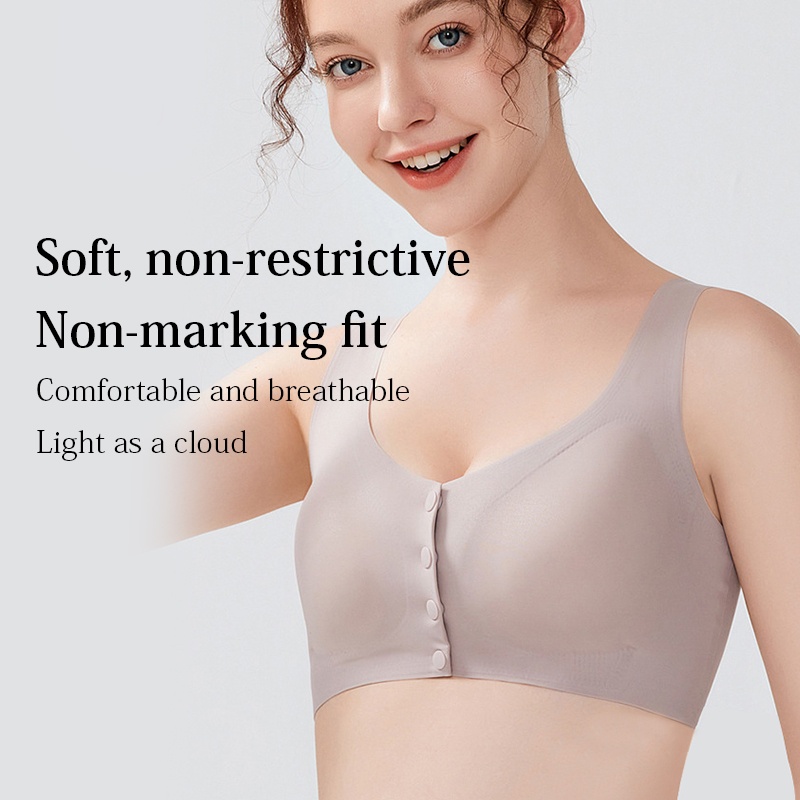
Step 3: Get dressed, then make small adjustments
Once the form is in place, put on the clothing you plan to wear and look at the overall fit.
You may want to adjust the prosthesis slightly upward, downward or toward the side so it sits naturally inside the cup. The goal is not mathematical symmetry. It is a position that feels comfortable and works with your clothing.
Check that the cup edge and neckline still contain the form comfortably. If you repeatedly need to pull the breast form back into position before you have even started moving, the bra, pocket or form size may need another look.
Step 4: Do a movement and comfort check
Standing in front of a mirror only tells you part of the story. A prosthesis should also work when you move through an ordinary day.
- Walk around for a few minutes
- Sit down and stand up normally
- Turn your torso gently
- Move your arms within your normal comfortable range
- Check whether the form remains reasonably stable
- Notice any pressure, rubbing or heat building behind the form
If you are still under post-surgery movement restrictions, follow those instructions rather than performing a movement test that exceeds your current range.
Persistent movement does not always mean you need a tighter bra. The form shape, weight, cup size or pocket construction may be the issue.
For help separating those factors, continue to our breast prosthesis fit and comfort guide .
Step 5: Remove, clean and store the breast form
At the end of wear, remove the form gently rather than pulling it sharply by one edge.
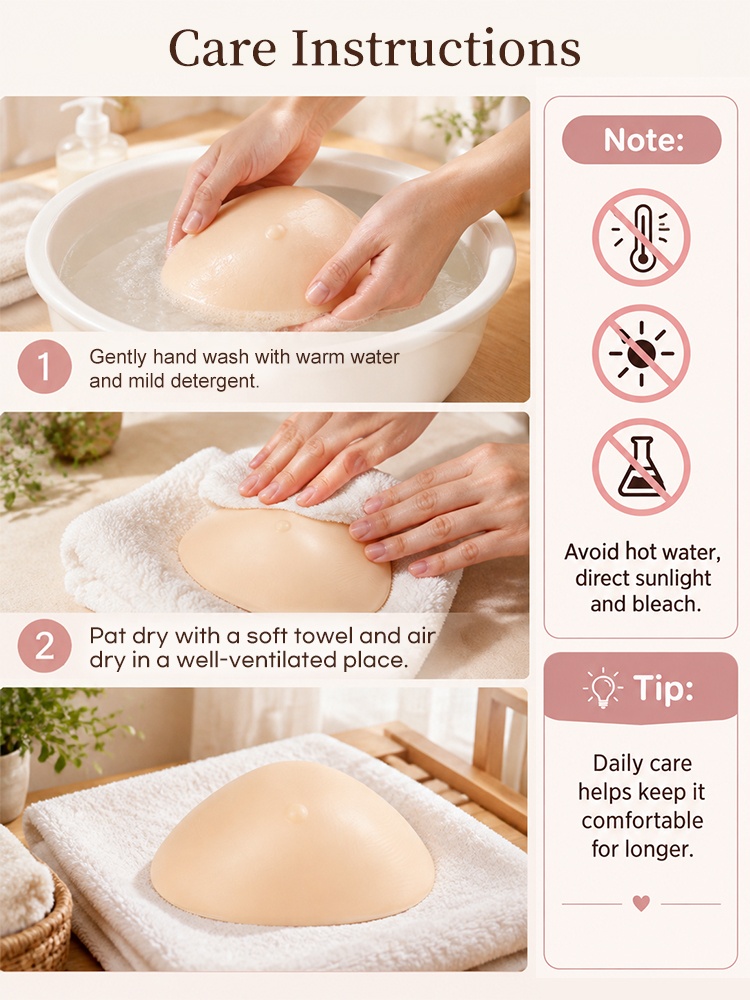
Care instructions differ by material and manufacturer. For many standard silicone breast prostheses, gentle washing with warm water and mild soap or detergent is appropriate, followed by careful drying.
- Remove the breast form from the bra or pocket.
- Wash it according to the manufacturer's instructions.
- Pat it dry gently or allow it to air dry as directed.
- Keep it away from direct heat and sharp objects.
- Store it in its original box or another supportive container that protects its shape.
Adhesive/contact forms need their own cleaning routine because the adhesive surface must be cared for correctly. Follow the instructions for that specific product rather than using a general silicone-form routine.
For more detail on daily care, continue to how to care for a breast prosthesis .
What if the prosthesis never feels quite right?
Constant adjustment is useful feedback. If the breast form repeatedly rides upward, turns inside the cup, feels too heavy or creates uncomfortable pressure, you do not have to solve the problem by simply tightening your bra.
Recheck the cup, band, breast-form size and shape together. A prosthesis fitter or breast care nurse can also help if you are unsure whether the issue comes from the form or the garment.
FAQ: How do you wear a breast prosthesis?
Which way does a breast prosthesis go?
It depends on the design. Some forms are left- or right-specific, while others are symmetrical or universal. Use the orientation shown by your fitter or the manufacturer's instructions for your particular prosthesis.
Does a breast prosthesis have to go inside a pocket?
No. Many removable breast forms can sit directly inside a well-fitting full-cup bra. A pocket is useful if you prefer additional containment or more consistent positioning.
Do I put the breast form in before or after putting on my bra?
With a pocketed bra, many people find it easier to insert the form first and then put the bra on. Others prefer adjusting it once the bra is in place. Use whichever method is comfortable for your hands, shoulders and bra design.
How do I know if my breast prosthesis is positioned correctly?
It should feel comfortable, sit securely within the cup or pocket and remain reasonably stable during normal movement. You should not need to keep repositioning it throughout the day.
How should I store a breast prosthesis when I am not wearing it?
Follow the manufacturer's instructions. Many silicone forms are best kept in their original box or another supportive container that protects their shape and keeps them away from direct heat and sharp objects.