

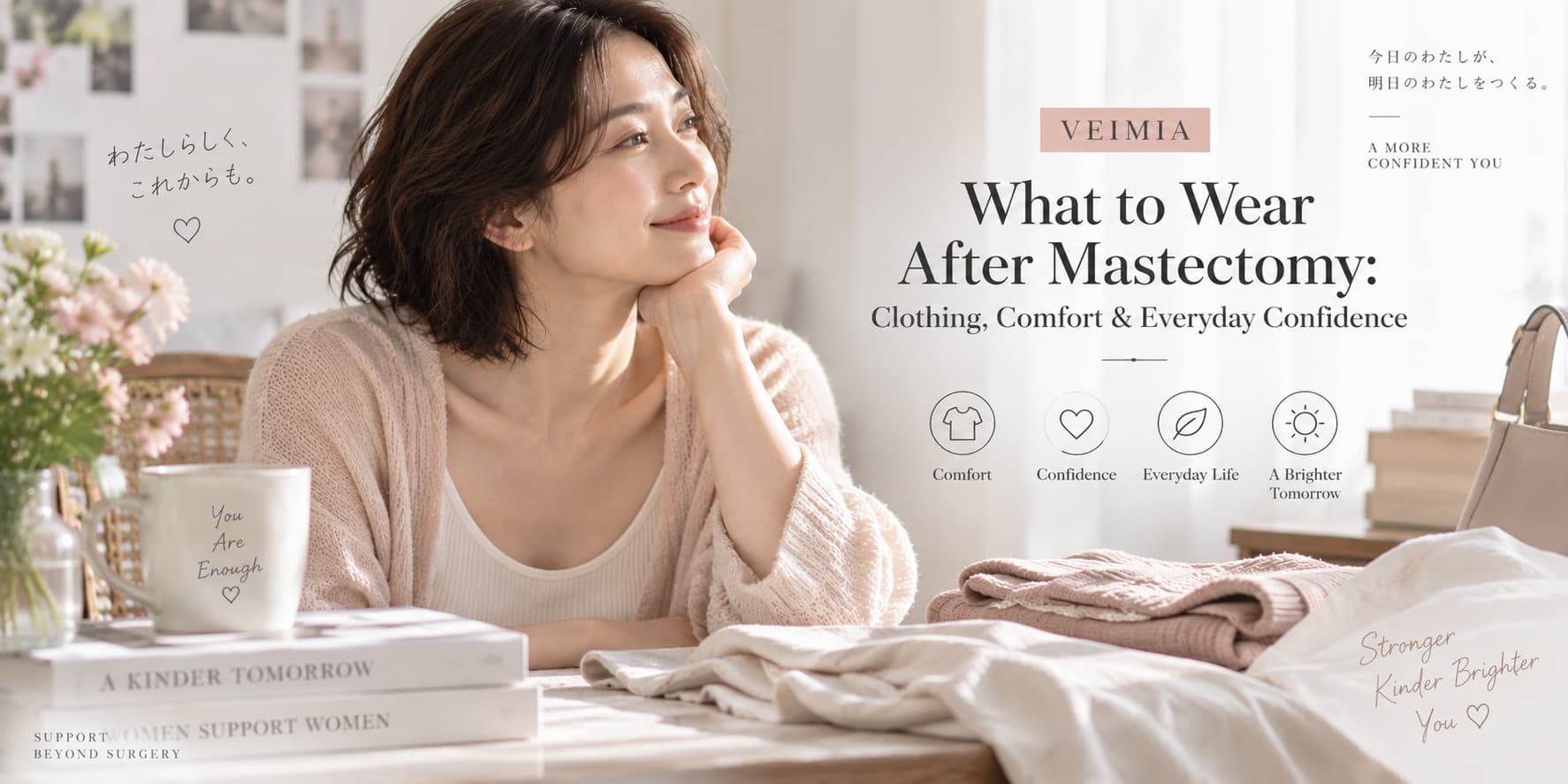
What to Wear After Mastectomy: Clothing, Comfort & Everyday Confidence
Getting dressed after breast surgery can feel unexpectedly different. Start with comfort, give yourself room to experiment, and remember that you can dress with a breast form, without one, or differently from one day to the next.
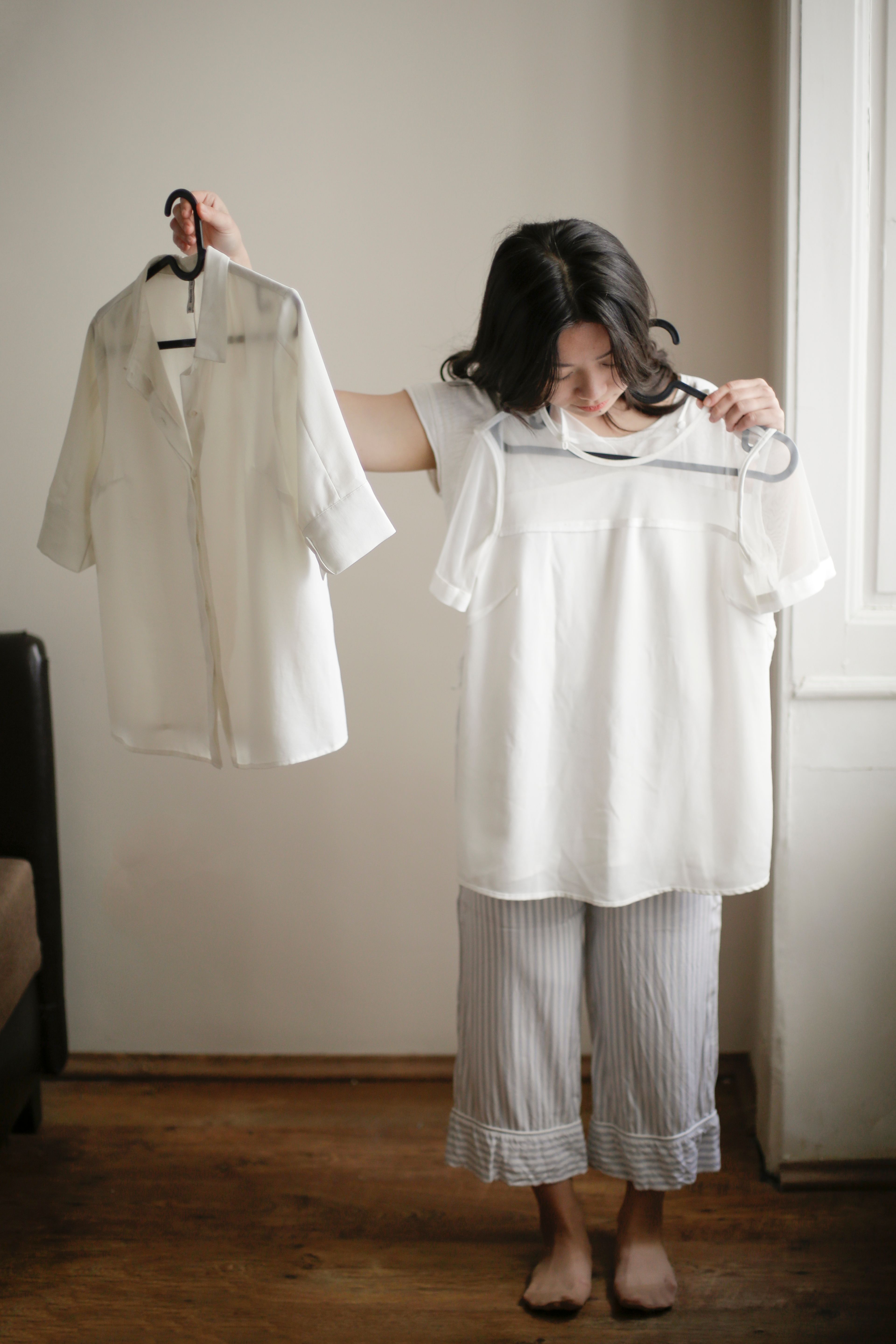
What should you wear after a mastectomy? Start with what feels easy on your healing body—not with rules about how you should look.
In early recovery, loose or easy-to-open tops and soft fabrics may make dressing simpler, especially if arm and shoulder movement is limited. As healing progresses, you can experiment with your usual clothes, new silhouettes, breast forms, bras—or no bra at all—according to your comfort and medical guidance.
There is no one post-mastectomy wardrobe.
Before surgery, getting dressed may have been something you barely thought about.
Then suddenly a button, bra band, neckline or tight sleeve can feel like a decision.
Part of that is practical. Your chest may be tender, sensation may feel different, and shoulder movement can be restricted during early recovery. Swelling can also temporarily change how familiar clothes fit.
Part of it can be emotional.
A favourite dress may sit differently. A mirror may catch your attention in a new way. You might feel more comfortable wearing breast shape under one outfit and prefer a flat silhouette under another.
None of this means you need to replace your wardrobe or learn a new set of fashion rules.
Dressing after mastectomy can simply be an experiment in what works for your body now.
Dressing May Feel Different—and That's Okay
One useful thing to know about clothes after mastectomy is that what feels right can change as recovery progresses.
Clothing that feels perfect during the first two weeks may be completely unnecessary later.
Early on, you may care mostly about whether something is easy to put on without stretching your arm too far. Later, you may start noticing shape, necklines, colour and whether an outfit feels like your personal style again.
You may also find that your chest changes during healing, so rushing to replace every bra or fitted top immediately is not always useful.
Treat the wardrobe as flexible.
Your clothes do not have to make your body look unchanged.
Their first job can simply be to help you move through the day comfortably.
If the emotional side of body change feels more significant than the clothes themselves, start with our guide to Life After Mastectomy .
Easy-to-Wear Tops Can Make Early Recovery Simpler
During early recovery, shoulder and arm movement can feel stiff or sore. That can make pulling a fitted top over your head more awkward than usual.
Depending on your surgery and your care team's instructions, you may find it easier to reach for clothes that require less stretching and twisting.
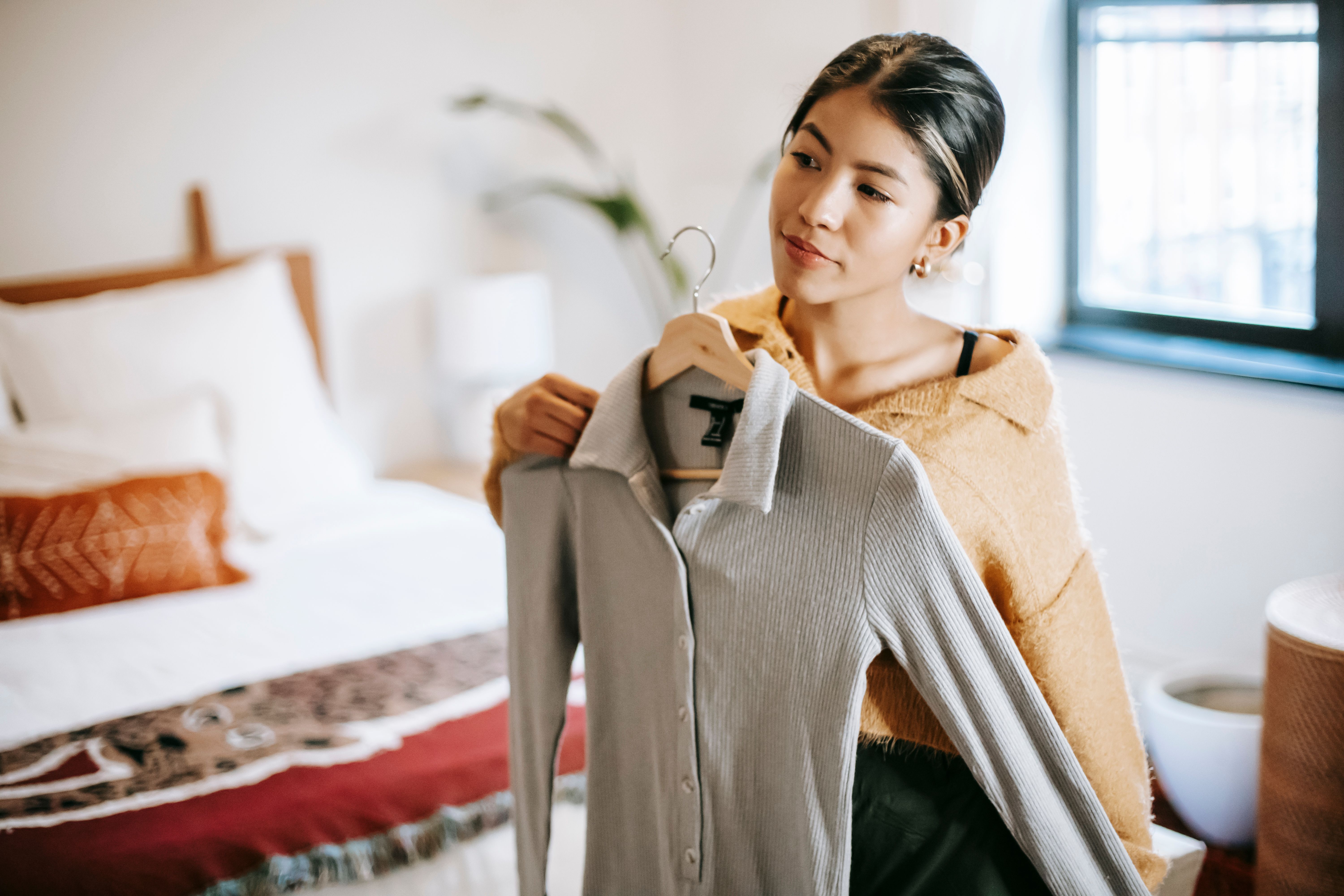
If you have surgical drains, your breast care team may also have specific advice about clothing and how to manage them safely.
Avoid forcing a movement simply to get into a particular outfit.
That blouse can wait.
Soft Fabrics Can Matter More Than You Expect
After surgery, the chest area may feel tender, numb, hypersensitive—or a mixture of sensations that changes from one area to another.
Texture can suddenly become noticeable.
A seam you never thought about before may feel irritating. Lace may catch on sensitive skin. A rigid band or scratchy label may become the first thing you notice when you get dressed.
During healing, many people prefer fabrics and construction that create less friction.
Breathable and usually gentle against sensitive skin.
Flexible, lightweight and easy to layer.
Useful when you want warmth without a stiff silhouette.
Can reduce rubbing where rough seams or detailing feel uncomfortable.
Layering Does Not Have to Mean Hiding Yourself
Advice about post mastectomy clothing sometimes focuses heavily on camouflage:
Wear patterns. Wear scarves. Add layers. Hide asymmetry.
Those ideas can be useful if that is what you want.
But layering can also simply be styling.
An open shirt over a tank can create movement. A cardigan can help with temperature changes. A lightweight jacket can make a work outfit feel finished. A scarf can add colour because you enjoy it—not because your chest needs to be concealed.
You are also allowed to wear fitted clothes.
Going flat does not require oversized shirts.
Wearing a breast form does not require high necklines.
There are practical considerations with some garments, but style itself is not a medical rule.
Three Dressing Paths—and All Three Are Valid
There is no single way to dress after mastectomy.
Your choice can be consistent—or it can change depending on the outfit, activity or simply how you feel that morning.
Wear a Breast Form
You may prefer breast shape under certain clothes, at work, while exercising or whenever it feels right to you.
Go Flat
You may prefer your natural post-mastectomy silhouette and choose clothes around comfort rather than recreating breast shape.
Switch Depending on the Day
A breast form does not have to be an everyday commitment. You can wear one with some outfits and not with others.
Your wardrobe does not need one permanent answer.
What feels right on Monday does not have to determine what you wear on Saturday.
Dressing With a Breast Form
If you choose to wear a breast prosthesis, the goal is not necessarily to redesign your entire wardrobe around it.
A breast form can be worn inside a suitable bra or supportive garment. Forms differ in shape, weight and material, so how one behaves under clothing can vary.
When trying a breast form, it can be useful to wear a fitted top during the fitting so you can see not only how the form looks while standing still, but how it sits when you move.
Consider:
- whether the form stays secure as you move;
- whether its weight feels comfortable;
- how your usual necklines look and feel;
- whether a pocketed garment feels more secure to you; and
- whether you actually like the overall silhouette.
The last point matters.
A prosthesis fitting is not only about matching a technical size. It is also about how you want to look and move in your clothes.
For a deeper guide, see our Breast Prosthesis Guide .
Dressing Without a Breast Form
If you prefer not to wear a breast form, you do not need a separate category of clothes labelled “for flat women.”
Start with what you already own.
Try things on.
Some garments may surprise you.
A structured shirt may create a silhouette you like. A fitted knit may make your flat chest more visible—and you may decide that feels completely comfortable. Prints, draping and loose cuts can soften asymmetry if you want that effect, but they are options rather than requirements.
If you have had one breast removed, you may find certain cuts visually asymmetric. Whether that matters is entirely personal.
There is no requirement to disguise it.
Bras, Camisoles and Going Braless
Another common question is whether you need a special bra after mastectomy.
Not necessarily.
What is appropriate depends partly on the surgery you have had. If your surgeon or breast care nurse has given you instructions—particularly following reconstruction—those instructions come first.
During early healing, many women find a soft, non-wired bra more comfortable. If shoulder movement is restricted, front fastening may also be easier.
But some people feel more comfortable without a bra.
Later, once healing has progressed, your options may broaden considerably.
Depending on your needs, you might choose:
If you want to explore this question in more detail, read What Bra Should You Wear After Mastectomy? .
Dressing for Work, Travel and Social Plans
Eventually, the question changes from “What is comfortable after surgery?” to something more ordinary:
“What do I want to wear today?”
That transition can be a meaningful one.
For Work
Choose a base layer that feels comfortable for several hours, then build your usual work style around it. A blazer, cardigan or open shirt can also make temperature changes easier to manage.
For Travel
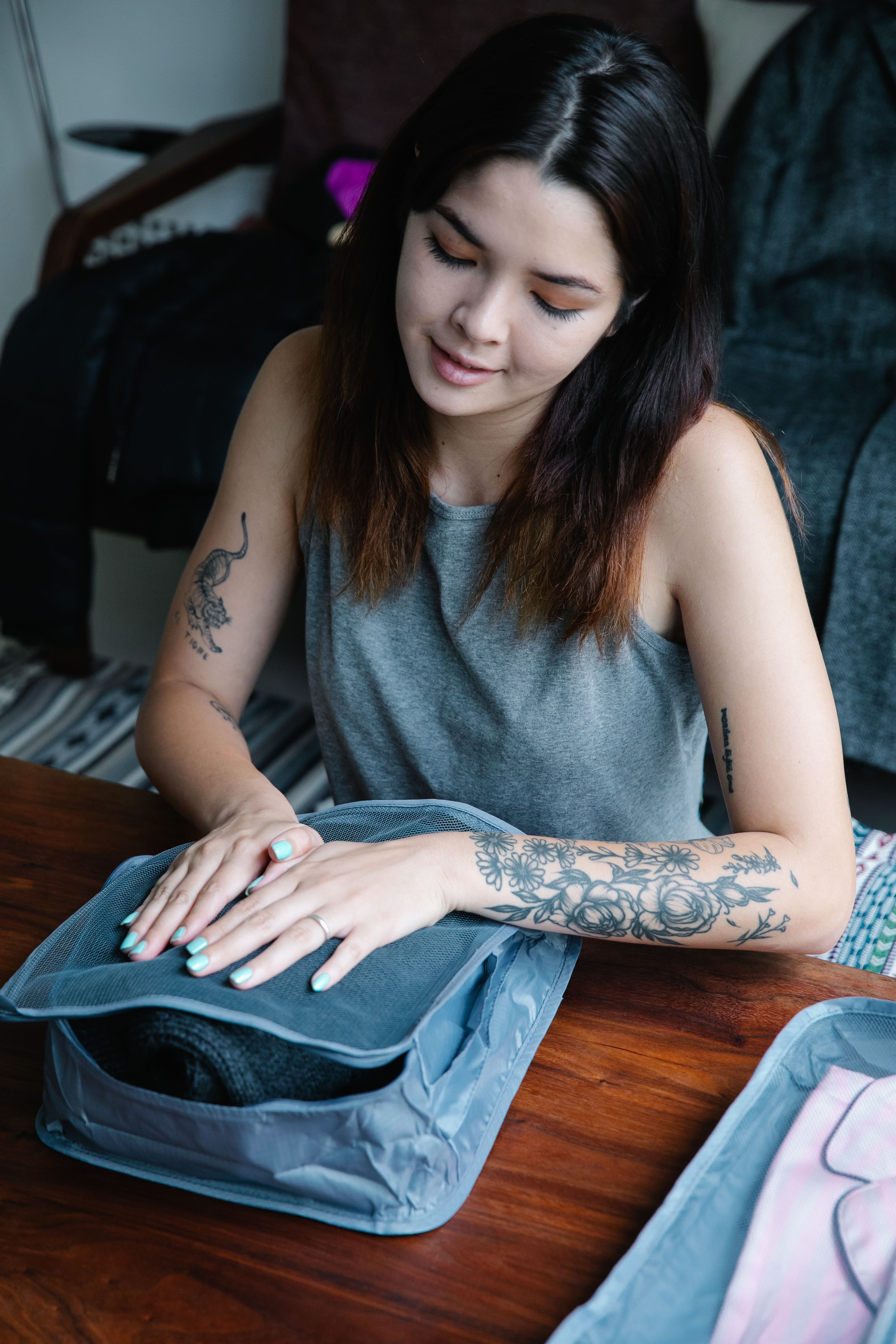
Think about long sitting, temperature changes and how easily you can adjust layers. If you wear a breast form, consider what will feel comfortable over a full travel day.
For Social Plans
You do not need a special “confidence outfit.” Try the clothes you actually want to wear, then adjust the bra, breast form or layers only if you want to.
And if you change your mind five minutes before leaving the house?
Change the outfit.
Wear the breast form.
Take it off.
Put on the oversized cardigan.
Put the fitted dress back on.
There does not need to be a deeper meaning behind every clothing decision.
Confidence Does Not Have to Start in the Mirror
Advice about dressing confidently after surgery can sometimes suggest that the right outfit will solve body-image concerns.
Clothes can help.
But confidence can also be much quieter.
It might be getting dressed without thinking about your chest for twenty minutes.
Going to lunch in the same shirt you always liked.
Wearing a breast form because you want one today, not because you believe you should.
Or stepping outside without one.
The goal is not to find clothes that make your body disappear.
It is to find clothes that let you get on with living in it.
From the VEIMIA Pinkbook Breast Care Series
→ Life After Mastectomy → Breast Prosthesis Guide → What Bra Should You Wear After Mastectomy?What to Wear After Mastectomy: Frequently Asked Questions
What should I wear after a mastectomy?
During early recovery, many people prefer loose or easy-to-open tops and soft fabrics that do not rub sensitive areas. As movement and comfort improve, you can gradually return to the clothes and styles you prefer, following any specific advice from your surgical team.
Are button-up shirts easier to wear after mastectomy?
They can be. Front-opening shirts and jackets may be easier during early recovery if your shoulder or arm movement is limited because they require less overhead reaching.
What fabrics feel comfortable after mastectomy?
Soft, breathable fabrics such as cotton and smooth jersey may feel comfortable while skin and scars are sensitive. Avoid anything that rubs or irritates the surgical area, and follow your care team's advice if you are also receiving radiotherapy.
Do I need special clothes if I wear a breast form?
Not always. Many breast forms can be worn with ordinary clothing and a suitably supportive bra or garment. Some people prefer pocketed bras or clothing because they help hold the form securely.
How can I dress if I go flat after mastectomy?
You can start with the clothes you already enjoy. Fitted clothing, loose silhouettes, patterns, layering and structured garments can all work. There is no requirement to disguise a flat or asymmetric chest.
Do I have to wear a bra after mastectomy?
Not everyone needs the same type of bra after surgery. Your surgeon or breast care nurse may give specific instructions depending on your procedure, especially after reconstruction. Some people find a soft non-wired bra comfortable during healing, while others may prefer not to wear one.
Can I sometimes wear a breast form and sometimes go flat?
Yes. A breast form does not have to be an everyday commitment. Some people wear one with certain clothes or for particular activities and choose to go without it at other times.
How can I feel more confident getting dressed after mastectomy?
Give yourself permission to experiment rather than expecting one perfect look. Try familiar clothes, different layers and different choices about bras or breast forms. Confidence may come gradually from comfort and familiarity rather than from recreating your pre-surgery appearance.
Medical note: This article provides general information about clothing and everyday comfort after breast surgery. Your surgeon, breast care nurse or treatment team may give specific instructions about bras, compression, wound care, drains, shoulder movement, reconstruction or radiotherapy. Follow their advice for your individual recovery.
```